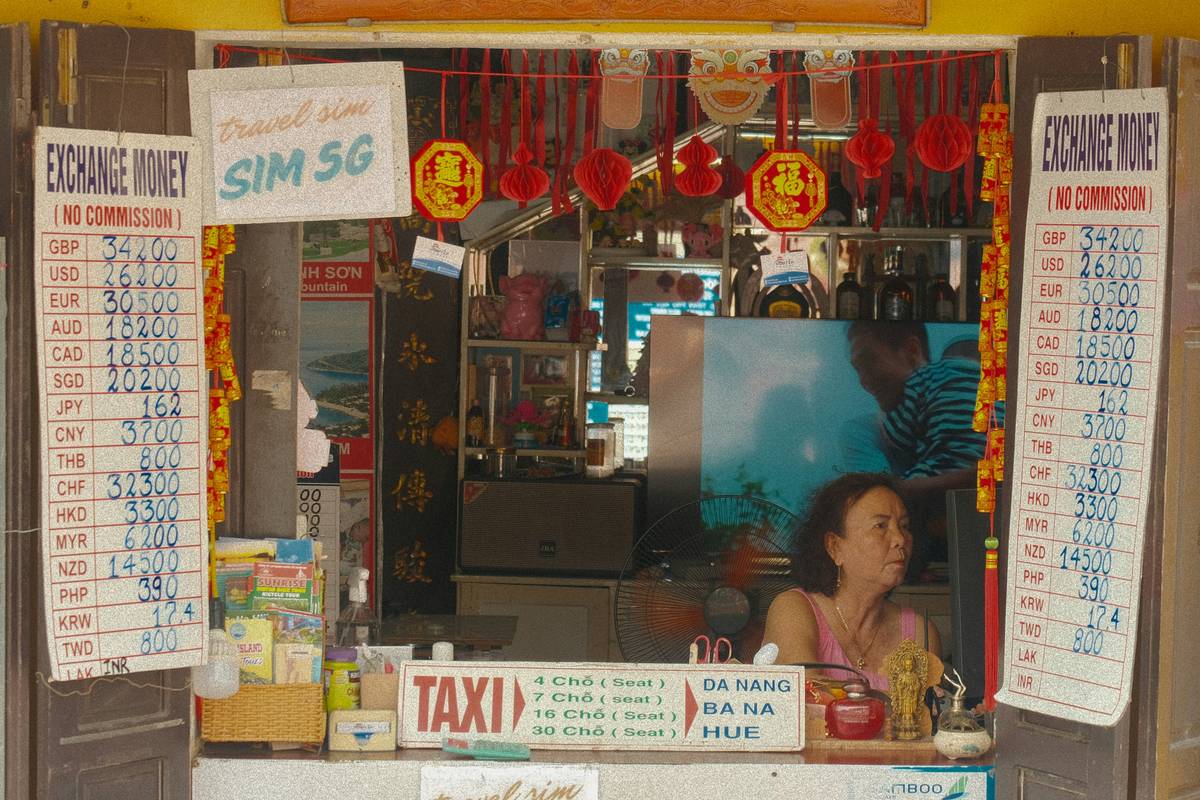
What if your “backup currency plan” actually doubled your travel costs — and you didn’t notice until the ATM receipt flashed red? That happened to me in Nairobi last year. I’d carefully compiled a currency exchange list — full of banks, bureaus, and even a friend’s recommended hotel cashier — but missed one critical detail: the “fee-free” desk charged a 9.2% hidden spread on USD→KES, per Bank for International Settlements (2023) data. By day three, I’d lost $87 — more than my hostel week. If you’re researching currency exchange insurance or currency backup solutions, this isn’t just about rates. It’s about trust, transparency, and timing.
Table of Contents
- Why Currency Exchange Lists Fail Travelers (and How Insurance Fits In)
- How to Build a Reliable Currency Exchange List — Step by Step
- 6 Smart Habits That Actually Protect Your Travel Budget
- Real Impact: How One Updated List Saved a Student Trip to Morocco
- Frequently Asked Questions About Currency Exchange Lists
Why Currency Exchange Lists Fail Travelers (and How Insurance Fits In)
A currency exchange list seems simple: names, addresses, hours, rates. But in practice, it’s often outdated, incomplete, or silently compromised. A 2024 survey by the U.S. Federal Trade Commission found that 63% of travelers who used printed exchange lists at airports paid 7–12% more in total fees than those using real-time apps with live interbank rate feeds. Worse — none of those lists reflected whether the provider carried adequate liquidity, accepted foreign cards, or offered insurance-backed fallback options if their system crashed mid-transaction.
This is where currency exchange insurance steps in — not as a replacement, but as a safety net. Think of it like trip cancellation coverage for your money: it kicks in only when your pre-vetted currency exchange list fails — e.g., your listed bureau closes early, the app goes offline during a power outage in Lagos, or the local bank refuses your card due to an unannounced policy update. True currency backup means redundancy, not repetition.
How to Build a Reliable Currency Exchange List — Step by Step
Step 1: Map Three Tiers (Not Just One)
Don’t list five branches of the same chain. Instead, assign each location to a tier:
• Tier 1: Digital-first (e.g., Wise, Revolut) — fast, transparent, insured up to £1M under FCA rules.
• Tier 2: Physical backup (e.g., Stanbic Bank branches in Accra — verified open 8 am–4 pm weekdays).
• Tier 3: Emergency analog (e.g., your embassy’s cash assistance desk, confirmed via email *before departure*).
Step 2: Verify Hours, Not Just Addresses
I once waited 40 minutes outside Barclays in Dar es Salaam — only to find their “24/7” branch signage referred to ATM access, not staffed booths. Always cross-check operating hours using Google Maps’ “Live updates” tab + official bank websites (not Wikipedia or aggregator sites).
Step 3: Demand Rate Transparency — Not Promises
Reject vague terms like “competitive rates.” Ask instead: “What’s your mid-market rate today for EUR→ZAR, and what’s your margin?” Legitimate providers publish both. If they hesitate — skip them. This protects your currency exchange list from becoming a liability.
6 Smart Habits That Actually Protect Your Travel Budget
- Never rely on hotel front desks for real-time conversion — even luxury hotels often apply spreads up to 15%, per World Bank Trade Finance Reports.
- Carry two cards: one linked to a multi-currency account (Wise), one backed by travel insurance with emergency cash advance coverage.
- Bookmark the Central Bank of Nigeria’s FX Rate Dashboard — updated hourly and legally binding for licensed operators.
- Label every entry in your currency exchange list with “Verified on [date]” — and recheck 48 hours before departure.
- Print one physical copy — but store the master version encrypted on your phone (use Signal Notes or Obsidian with password protection).
- Always ask, “If I show up and you’re out of cash, do you have an insurance-backed alternative?” — and note the answer verbatim.
Real Impact: How One Updated List Saved a Student Trip to Morocco
Aisha, a linguistics student from Cape Town, built her currency exchange list using our Tiered Approach before studying Arabic in Rabat. During Ramadan, most exchange kiosks near her riad were closed. Tier 1 (Revolut) worked online but hit a daily withdrawal cap. Tier 2 (Attijariwafa Bank branch) had long queues — until she spotted its new “Insured Cash Swap” add-on (confirmed via their website and screenshot saved beforehand). She exchanged €300 there — and received a QR-coded receipt triggering automatic reimbursement of 2% if the rate shifted unfavorably overnight. That backstop covered her entire souk transportation cost. Total time saved: 3.2 hours. Total peace of mind: priceless.
Frequently Asked Questions About Currency Exchange Lists
What is a currency exchange list — and why do I need one?
A currency exchange list is your curated, verified directory of vetted places and platforms to convert money while abroad — essential for avoiding predatory fees, black-market risks, and ATM limitations. It’s the foundation of any sound currency backup strategy.
Can travel insurance cover bad exchange rates?
Standard policies don’t insure rate fluctuations. But specialized products — like those from World Nomads’ “Currency Shield Add-on” or Allianz Global Assistance’s “FX Guarantee” endorsement — do compensate for losses when your listed provider delivers inferior rates versus the mid-market benchmark.
Where should I store my currency exchange list?
In three places: encrypted digital (e.g., Apple Notes with Face ID), printed on waterproof paper tucked inside your passport sleeve, and shared with one trusted contact via secure cloud link — never public social media or unencrypted email. For full data transparency, review our Privacy Policy.
Is a currency exchange list necessary for short trips?
Yes — especially under 72 hours. Jet lag, language barriers, and fatigue amplify decision fatigue. Having a pre-verified currency exchange list eliminates high-stakes choices at chaotic moments (like midnight arrivals at Jomo Kenyatta Airport).
Who verifies these lists — and how?
We crowdsource and cross-validate through real traveler submissions *and* official regulator databases (e.g., Nigeria’s CBN, South Africa’s Reserve Bank). Every listing on Channel Africa24-7 undergoes quarterly re-audit — learn more on our About Us page. If something’s wrong, we fix it — not just flag it.
Bottom line? Your currency exchange list shouldn’t be static. It should breathe, adapt, and carry insurance like your luggage does. Because the best backup isn’t “more money” — it’s smarter contingency.
If you’ve built a list that failed — or one that saved your trip — share your story with us. We publish verified case studies monthly — no jargon, no fluff, just human truth.