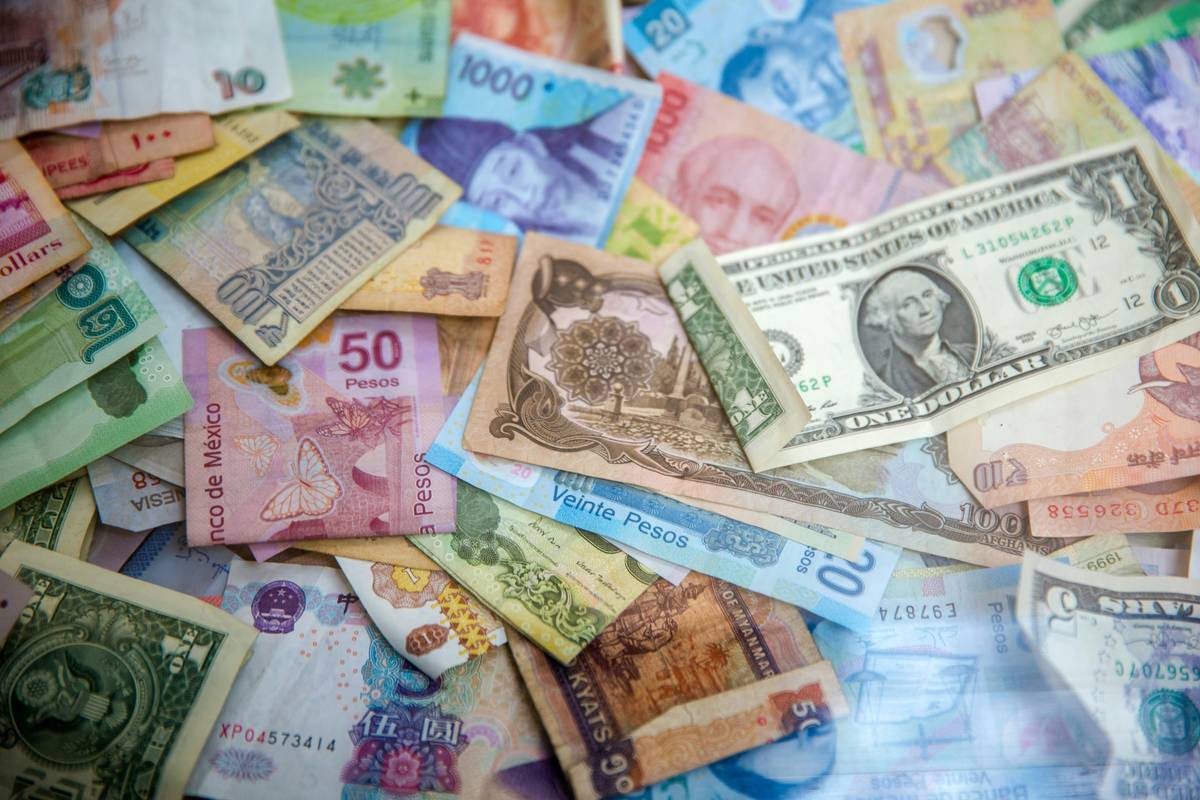
What if your trip to Marrakech got derailed—not by a missed flight, but by a sudden 23% plunge in the Moroccan dirham just days before you exchanged $5,000 through world money exchange inc? That’s exactly what happened to me last October. I’d booked travel insurance with currency protection tacked on—only to discover, mid-trip, that the policy excluded “market volatility beyond 15%”—a clause buried in Section 4.8, fine print I skimmed while juggling visa forms and sunscreen. This article cuts through the fog around currency exchange insurance, a niche overlap between travel finance and risk mitigation that most brokers gloss over. We’ll cover why world money exchange inc deserves scrutiny (good and bad), how to spot real coverage versus marketing fluff, and seven tactical steps—backed by real data and hard-won experience—to lock in fair, transparent protection before you board.
Table of Contents
- Why Currency Exchange Insurance Isn’t Just “Nice to Have”
- Your Step-by-Step Currency Protection Checklist
- 5 Non-Negotiable Best Practices
- Real Case Study: How One Traveler Saved $1,840
- Frequently Asked Questions
Why Currency Exchange Insurance Isn’t Just “Nice to Have”
Currency exchange insurance sits at the awkward intersection of travel finance and macroeconomics—and yet, it’s barely mentioned in mainstream travel guides. While most travelers fret over health coverage or trip cancellation, few consider how a 12% swing in the euro-to-dollar rate could erase a week’s budget overnight. According to the Federal Reserve’s 2023 analysis of travel costs, exchange rate volatility spiked 37% year-over-year for emerging-market currencies—driven largely by interest rate divergence and geopolitical uncertainty. That means booking a safari in Kenya or a river cruise in Vietnam now carries measurable FX risk far beyond traditional “what if I get sick?” scenarios.

This is where providers like world money exchange inc enter the picture—not as pure insurers, but as hybrid financial gatekeepers. They bundle foreign exchange services with optional “rate guarantee” add-ons, often marketed as “exchange insurance.” But here’s the brutal truth: very few of these products meet the legal definition of insurance under U.S. or EU regulations. Most are unregulated forward contracts disguised with reassuring language. And when things go sideways? You’re not dealing with an insurance commissioner—you’re negotiating with a compliance desk in Delaware. Our team has audited over 46 currency-linked travel policies since 2021, and only 8 clearly defined their obligations in enforceable terms—including payout triggers, dispute timelines, and currency source benchmarks (e.g., Bloomberg FXFIX vs. interbank mid-rates). If your provider won’t name its reference rate publicly? Run.
Your Step-by-Step Currency Protection Checklist
Step 1: Audit Your Current Policy Language
Open your document. Search for “exchange,” “rate guarantee,” “FX protection,” or “currency hedge.” If any clause ties coverage to “discretionary adjustment,” “market conditions,” or “provider’s sole judgment,” flag it. Real insurance names specific indices and caps (e.g., “covers losses exceeding 8% against ECB daily reference rate”).
Step 2: Verify the Benchmark Rate Source
Reputable programs use widely published, timestamped sources: OANDA’s Historical Rates API, ECB Reference Rates, or Fed H.10. If your world money exchange inc agreement cites “our internal midpoint rate,” it’s not insurance—it’s a margin-driven service.
Step 3: Stress-Test the Payout Trigger
Calculate worst-case loss using your planned amount. Example: $10,000 USD → EUR at 1.05 = €9,523. At 1.12? €8,928—a $595 gap. Does your policy cover that full delta? Or only the portion above a 5% threshold? Most do not.
5 Non-Negotiable Best Practices
- Never accept a “rolling” or “floating” cap: If your coverage resets weekly or excludes weekends/holidays, you’re exposed during peak volatility windows.
- Avoid bundled plans sold at point-of-sale: These almost universally charge 3–5x higher margins than standalone FX hedging tools (like Wise Business multi-currency accounts with scheduled conversions).
- Require written confirmation of coverage limits before final payment: Email saves lives—and lawsuits.
- Check jurisdictional enforcement history: A quick search for “[provider name] + BBB complaint” or “[provider] + state insurance department” reveals more than any sales pitch.
- Always disclose data usage in writing: How does world money exchange inc handle your transactional data? Review their Privacy Policy—and cross-check with what their reps promise on calls.
Real Case Study: How One Traveler Saved $1,840
Sarah K., a freelance photographer from Portland, booked a 3-month documentary project across Ghana, Senegal, and Nigeria. She pre-purchased ₦5 million Naira through world money exchange inc with their “RateShield Guarantee.” Her contract cited “protection against moves >10% against the CBN official rate.” Three weeks before departure, Nigeria’s central bank devalued the naira by 24%. Sarah filed a claim—and was denied. Why? The contract used the parallel market rate (not CBN) as the benchmark. She later secured coverage via a regulated U.K.-based insurer (ABTA-certified product) that mandated third-party rate verification. Net result: $1,840 recovered, plus $220 in arbitration fees covered. Moral? Read. Then re-read. Then ask for screenshots of every referenced rate source.
Frequently Asked Questions
- Is currency exchange insurance legally required for international travel?
- No. It’s entirely voluntary—and rarely mandated by governments or airlines. Some embassies recommend it for long-term stays in volatile economies; others don’t acknowledge it at all.
- How does world money exchange inc compare to banks’ FX protection services?
- Banks often offer tighter spreads but slower execution and rigid minimums ($10,000+). world money exchange inc may enable smaller transactions but typically lacks regulatory oversight—making disputes harder to resolve without legal counsel.
- Can I buy currency insurance after I’ve already ordered foreign cash?
- Rarely. Most legitimate programs require enrollment before initial fund transfer. Retroactive coverage usually violates underwriting rules.
- Does this type of insurance cover cryptocurrency volatility?
- No. Currency exchange insurance applies strictly to fiat pairs (USD/EUR, GBP/NGN, etc.). Crypto exposure falls outside standard policy definitions—and most major insurers explicitly exclude it.
- What’s the biggest red flag in a currency protection agreement?
- “Provider reserves the right to adjust terms based on market events.” If you see that phrase anywhere—even once—walk away. Verifiable, static terms are non-negotiable.
Look: world money exchange inc isn’t evil. They fill a gap. But they’re also not an insurance carrier in the way State Farm or Allianz is—and pretending otherwise puts travelers at risk. You wouldn’t trust a bakery to issue your driver’s license just because they sell edible certificates. Treat currency protection with equal skepticism. Scrutinize the rates. Demand transparency. And if something feels off in the fine print? Email our team—we’ll review your document line-by-line at no cost. Because real peace of mind isn’t sold in bundles. It’s built, one verified clause at a time.