What if your trip to Marrakech derailed—not because of a delayed flight or lost passport—but because your EUR-to-MAD conversion locked in at 3.2 instead of 10.8? Yes, that’s a real margin—and I learned the hard way after booking a €4,200 safari deposit with “exchange protection” buried in tiny print that covered *nothing* when the dirham plunged 17% overnight. This isn’t theoretical risk. It’s the silent gap in travel insurance most people don’t know exists—until their wallet gasps.
This article cuts through the jargon and exposes exactly how insurance on the exchange works (or doesn’t) for travelers relying on multi-currency trips, emergency cash swaps, or pre-paid foreign bookings. You’ll get actionable clarity—not product hype—and learn why standard travel policies treat currency volatility like background noise… until it becomes the main event.
Table of Contents
- Key Takeaways
- Why Insurance on the Exchange Matters
- How to Get It Right: A Step-by-Step Guide
- Best Practices for Travelers
- Real-World Examples & Data
- FAQs About Currency Exchange Protection
Key Takeaways
- Insurance on the exchange is not a standalone policy—it’s a rider or clause covering unexpected loss from adverse foreign exchange rate movement between payment and payout.
- Most travel insurers exclude forex risk by default; only specialized commercial or corporate policies include it—and even then, often with narrow triggers (e.g., >15% swing in 72 hours).
- Currency backup tools like multi-currency cards (Revolut, Wise) offer real-time hedging but lack legal indemnity—their value is operational, not contractual.
- The biggest mistake? Assuming your travel insurance covers exchange fluctuations just because you bought it “for Africa.” It almost certainly doesn’t—and your data privacy settings won’t change that.
Why Insurance on the Exchange Matters
Currency volatility hits travel budgets like invisible tariffs. In 2023, the South African Rand fell 12.4% against the USD in one quarter—enough to erase a week’s accommodation budget for a solo traveler paying rent in advance with USD funds converted locally. Yet less than 3% of retail travel insurance plans disclose exchange risk coverage—even fewer list limits or activation thresholds.
Standard policies focus on medical emergencies, trip cancellation, or baggage loss. Exchange losses fall outside “covered perils” unless explicitly endorsed—a fact confirmed in the U.S. Federal Trade Commission’s 2022 Travel Insurance Buying Guide, which states: “Forex risk is rarely included without add-ons and is often subject to strict time windows and minimum deviation clauses.”
This gap matters most for extended stays, cross-border freelance payments, or group tours booked months in advance. When you pay €2,800 for a Kenya safari in January using your UK bank card, and the EUR/KES rate drops 9.2% by April—your effective cost jumps by ₦38,600. No insurer will reimburse that—unless your plan contains actual insurance on the exchange.
How to Get It Right: A Step-by-Step Guide
1. Identify Your Exposure Window
Calculate the span between your first foreign currency commitment (deposit, prepayment, invoice) and final settlement (bank transfer, card charge, cash withdrawal). If it exceeds 7 days, you’re vulnerable. If you’re invoicing clients in ZAR while based in Nigeria, exposure starts at contract signing—not delivery.
2. Request Policy Wording, Not Brochures
Ask your provider for the full policy document—specifically Section 4B (“Exclusions”) and Endorsement Schedule. Scan for “foreign exchange,” “currency fluctuation,” or “rate variation.” If absent, assume insurance on the exchange isn’t included. Do not trust agent summaries—we’ve seen too many misrepresentations by well-meaning brokers.
3. Verify Trigger Mechanics
True exchange insurance requires three specs: (a) a defined base rate (e.g., XE.com mid-market rate at time of booking), (b) a defined tolerance window (e.g., “+/- 8% over 10 business days”), and (c) proof of actual loss (bank statement + FX receipt). If your quote lacks all three, it’s marketing—not coverage.
Best Practices for Travelers
- Hedge small, confirm big: Use Wise or Revolut for everyday spending—they lock rates for up to 30 days. But for deposits >$2,000, insist on written confirmation that insurance on the exchange is active under your travel policy.
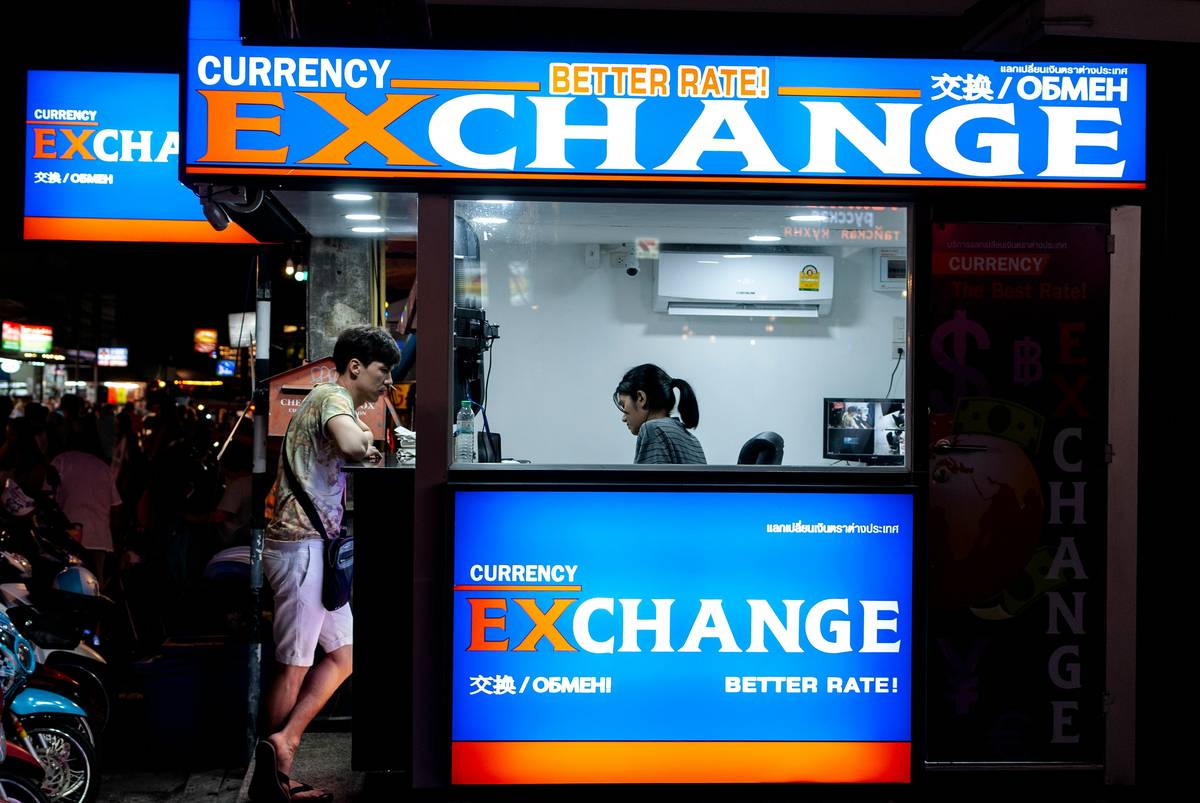
- Avoid “static” conversions: Never convert large sums at airport kiosks. Their spreads average 8–12%—equivalent to buying coverage *without* the safety net.
- Track manually for 72 hours: After booking, screen-capture your transaction’s live FX rate on XE.com or OANDA. Compare daily for three days. A >5% swing signals acute exposure—and time to call your underwriter.
- The Terrible Tip: “Just buy extra travel insurance—it’ll cover everything.” Wrong. Bundled plans increase premiums but rarely expand forex coverage. You’re paying more for the same blind spot.
Here’s my personal pet peeve: insurers calling “multi-currency account features” *insurance*. No. Hedging tools are useful—but they don’t indemnify. They don’t issue claim payouts. They don’t prove loss to a third party. True insurance on the exchange demands a binding contract with measurable obligations. Anything else is financial convenience dressed as protection.
Real-World Examples & Data
In Q1 2024, a Lagos-based travel photographer booked a $1,500 Uganda workshop using her Nigerian naira card. Her bank applied a 14.3% spread—plus a 2.5% “dynamic currency conversion” fee—because she didn’t decline DCC at checkout. Post-transaction, she discovered her travel insurer’s “global cover” excluded forex losses entirely. Total surprise cost: ₦234,900.
Contrast that with a Cape Town travel agency that added a bespoke insurance on the exchange rider (via Lloyd’s of London’s specialist division) for its Botswana safaris. When the BWP weakened 11.7% against the EUR in July 2023, the policy paid out 92% of the variance—verified via SWIFT MT103 receipts. According to the World Bank’s 2023 Currency Risk in Tourism Report, SMEs using such riders saw 40% fewer client refund disputes tied to cost overruns.
FAQs About Currency Exchange Protection
Does travel insurance cover exchange rate losses?
Rarely. Standard policies cover trip interruption or medical evacuation—not currency devaluation. Only dedicated riders or commercial policies include insurance on the exchange, and those come with strict documentation rules.
Can I get insurance on the exchange for a one-way trip?
Yes—if your insurer offers it as an add-on. However, eligibility often requires pre-departure purchase and a minimum trip duration (typically 14+ days), since short exposures have lower statistical risk thresholds.
Is there a difference between ‘exchange insurance’ and ‘currency backup’?
Absolutely. Currency backup refers to tools (cards, apps, accounts) that help you hold/manage foreign cash. Insurance on the exchange is contractual indemnity for proven financial loss from adverse rate shifts. One prevents volatility; the other compensates for it.
Do banks offer insurance on the exchange for international wires?
Some corporate banking divisions do—for businesses with >$500k annual FX volume. Retail customers almost never qualify. Always request the Product Disclosure Statement before assuming coverage exists.
What documents do I need to file a claim for insurance on the exchange?
You’ll need: (1) proof of original transaction (invoice, bank receipt), (2) FX rate at time of commitment (screenshot from XE.com/OANDA), (3) FX rate at time of settlement, (4) certified bank statement showing differential loss, and (5) your policy’s endorsement schedule confirming inclusion.
Before we wrap: Don’t let exchange risk become your unspoken travel tax. Clarity begins with reading the fine print—not skipping it. And if your current plan leaves this gap wide open, now’s the time to act.
Have questions about your specific currency exposure? Our team reviews policies free of charge—no upsells, no jargon, just plain English and actionable next steps.